
Introduction
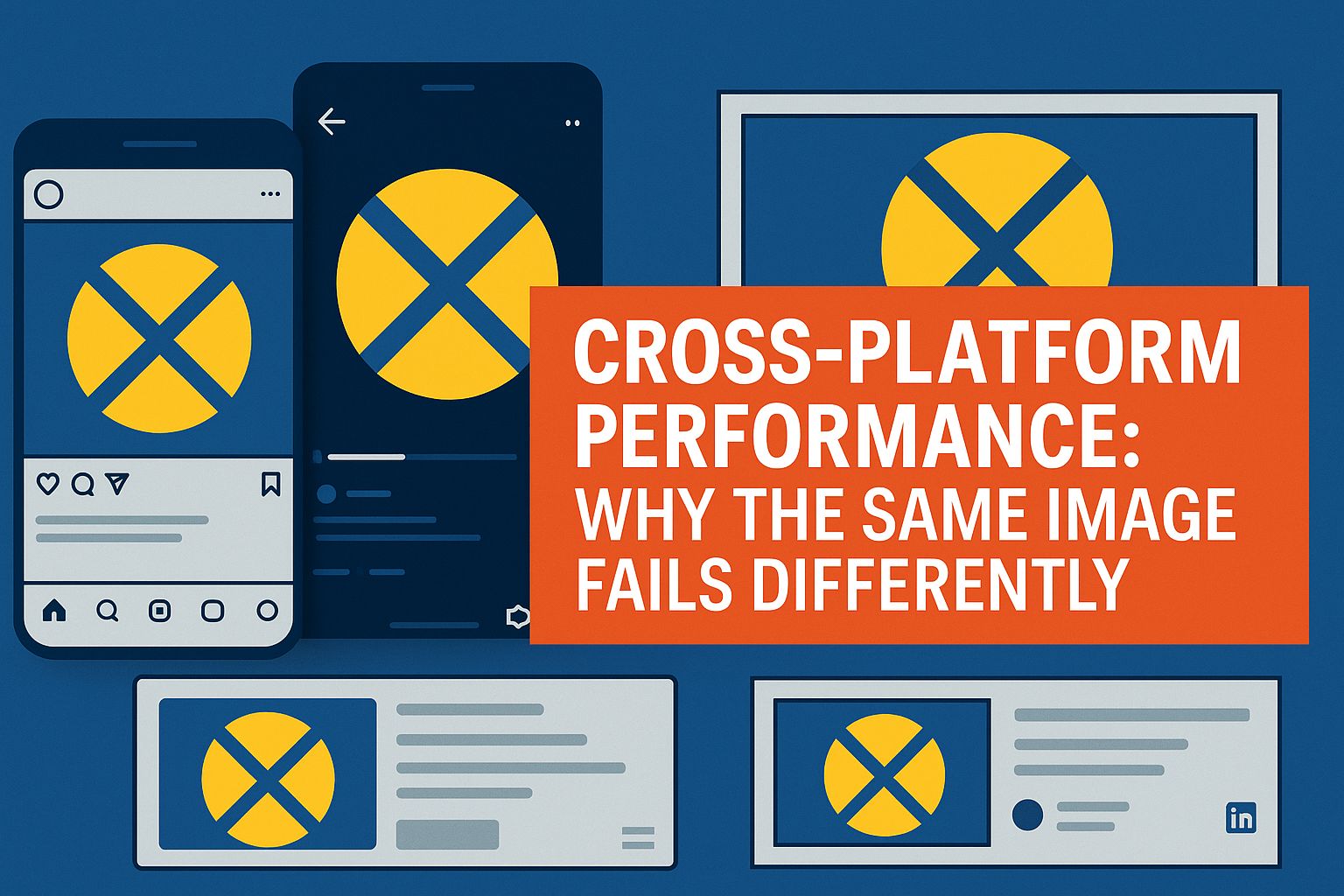
Copy-pasting one image across every network is the fastest way to get inconsistent results. Each platform has its own aspect ratios, cropping behaviors, UI overlays, and audience habits—so a visual that wins on Instagram can underperform on LinkedIn or X, and a TikTok cover that pops may flop as a YouTube thumbnail. This guide explains the mechanics behind performance gaps and how to adapt images so they feel native everywhere they appear.
Platform mechanics that change outcomes
- Aspect ratios and crops: Instagram prioritizes 4:5 in feed, Stories/Reels at 9:16, while X and LinkedIn tolerate 1:1 and 16:9 more gracefully; a single crop rarely survives all contexts without losing key elements.
- Grid and preview quirks: Instagram grid previews can crop differently than feed; a centered hook in 4:5 may be truncated in profile or link previews if safe zones aren't respected.
- UI overlays: Captions, buttons, and progress bars cover top/bottom zones in 9:16; a CTA near the edge may be obscured on TikTok/IG but stay visible on LinkedIn.
Audience and intent differences
- Consumption mindset: TikTok and Instagram reward bold, fast hooks and expressive faces; LinkedIn favors restrained palettes and clear value props; X prioritizes clarity in small, fast-moving feeds.
- Caption behavior: LinkedIn allows longer supporting text, shifting workload off the image; X caps brevity, making on-image microcopy more critical.
- Demographics and context: Platform age and professional mix alter what looks trustworthy or spammy; a loud CTA that works in reels may underperform on a professional feed.
Algorithm and placement effects
- Format preference: Vertical 9:16 dominates engagement in IG/TikTok; 16:9 is king for YouTube thumbnails; forcing one crop everywhere lowers native fit and early interaction.
- Preview vs full view: Thumbnails and cards use different frames than full posts; if the hook lives outside the preview crop, CTR drops even if the full image is strong.
- Recency and velocity: Early interactions matter; a mismatched image at launch gets buried faster by algorithms tuned to immediate engagement quality.
Why clarity fails differently network to network
- Contrast and scale: Small UI on X makes low-contrast text unreadable; Instagram's larger card size can tolerate finer type; LinkedIn desktop previews vary by panel width.
- Safe-zone conflicts: The same 9:16 design can be clear on Instagram but lose hooks under TikTok's caption area; central band placement mitigates this.
- Overlays vs photo backgrounds: Busy photos plus thin fonts fail in tiny previews; a simple plate behind text fixes CTR on X but may feel heavy on Pinterest.
Adaptation blueprint: make creatives feel native
- Crop per platform: Prepare 1:1, 4:5, 16:9, and 9:16 variants; keep the hook centered enough to survive grid and card crops per platform guidance.
- Safe zones: Encode top/bottom buffers for 9:16 (Stories/Reels/TikTok); keep headlines/CTAs in the central band for vertical; avoid edge-tight layouts everywhere.
- Type and contrast: Increase headline size and contrast for X and thumbnails; allow subtler treatment on larger cards; ensure legibility in dark/light themes.
- Tone and palette: Dial saturation and playfulness up for short-form entertainment surfaces; dial down for professional contexts; test variants aligned to audience expectations.
- Caption strategy: Reduce on-image copy for Instagram reels (let caption carry details), increase on-image clarity for X and YouTube thumbnails where copy is constrained.
Ship native, platform-ready image sets in minutes
Create optimized images for every platform with SocialPixOptimizer's platform presets and safe-zone templates.
Get Started FreeTesting and measurement per platform
- A/B by network: Run separate tests on each platform; a winner on IG is only a hypothesis on LinkedIn until validated.
- Normalize metrics: Compare by impressions or reach, not raw counts; use network-specific KPIs (e.g., save rate on IG, CTR on X, click-through to site on LinkedIn).
- Preview checks: Validate how the image appears in cards, grid previews, and mobile vs desktop before launch; many failures originate from preview mismatches.
Common failure scenarios (and fixes)
- IG feed win, X loss: Type too small/low contrast; fix by enlarging headline, adding a plate, and switching to 1:1 or 16:9 crop.
- TikTok/IG story loss: Hook placed too close to edges; move to central band, reduce background clutter, and increase subject scale.
- LinkedIn underperformance: Over-saturated palette and heavy CTA badge; switch to restrained color, cleaner background, and concise headline.
- YouTube thumbnail flop: Complex scene and long headline; simplify to expressive face or clear icon plus 2–3 word hook; verify at tiny preview size.
Workflow checklist (fast)
- Create a platform matrix of crops: 1:1, 4:5, 16:9, 9:16; encode safe zones and central-band hook rules per target.
- Build two tone variants (professional vs playful) and two contrast variants (subtle vs strong) for cross-platform testing.
- Preview in all platform contexts (feed, grid/card, story cover) and adjust placement and size before scheduling.
- Track platform-specific KPIs and templatize winners per network; do not force a universal master.
Conclusion
The same image fails differently because platforms don't see or reward visuals the same way: crops, overlays, preview frames, audience intent, and algorithmic preferences reshape performance. Treat each network as its own environment—crop natively, respect safe zones, scale type for the smallest preview, and tune tone to audience expectations. With per-platform adaptation and clean testing, a single concept becomes a set of native winners instead of a one-size-fits-none.